Introduction
What is AstroPT?
AstroPT is a Large Observation Model (LOM) for astronomy - a transformer-based foundation model designed to understand and generate astronomical data.
How does AstroPT work?
AstroPT is an autoregressive transformer under the hood.
Similarly to language models that predict the next word in a sentence, AstroPT processes sequences of astronomical data chunks to predict what comes next.
The intuition here is that this next-token-prediction task requires the model to internalise some understanding of the physical processes underlying the training data.
This is just like how a text GPT needs to have some knowledge of geography to guess a country’s capital given a description of that country, or some knowledge of coding to write compilable Fortran.
Below we can see this principle applied to a galaxy image, where we split the image into chunks and pass them into an AstroPT model:
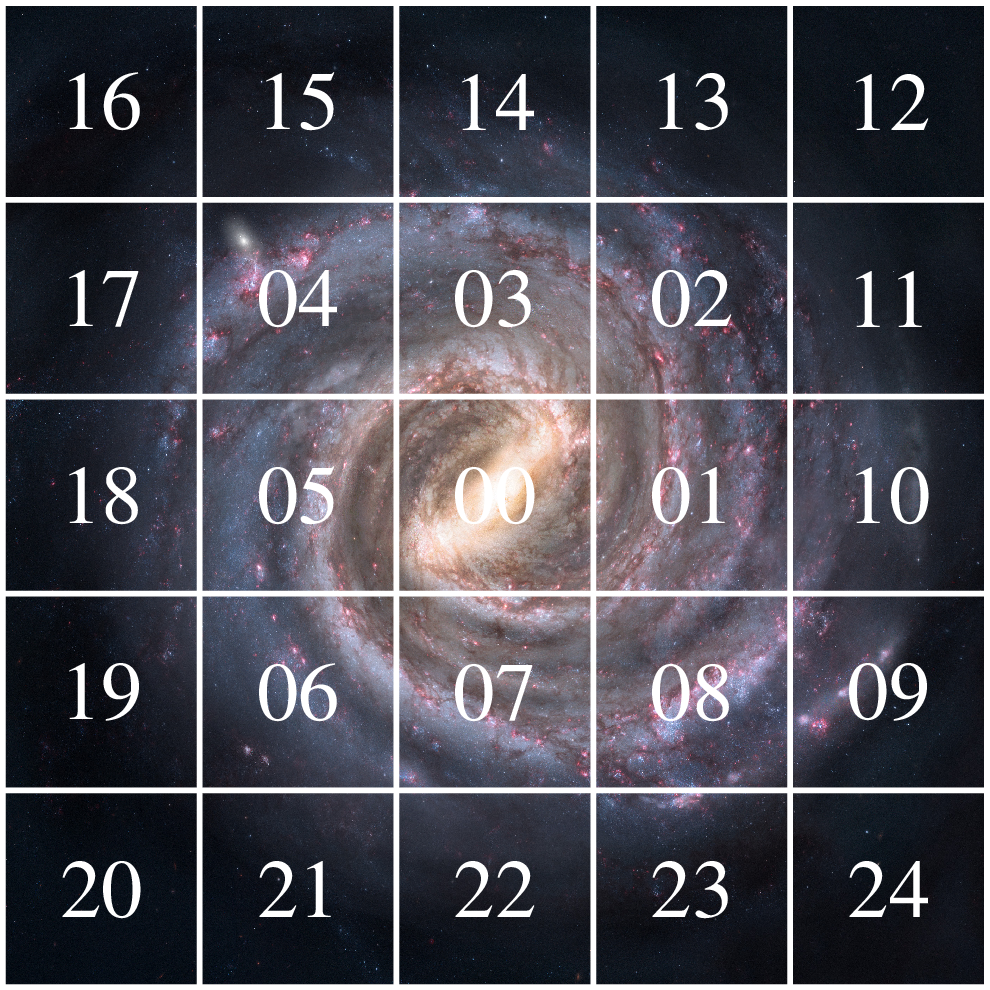
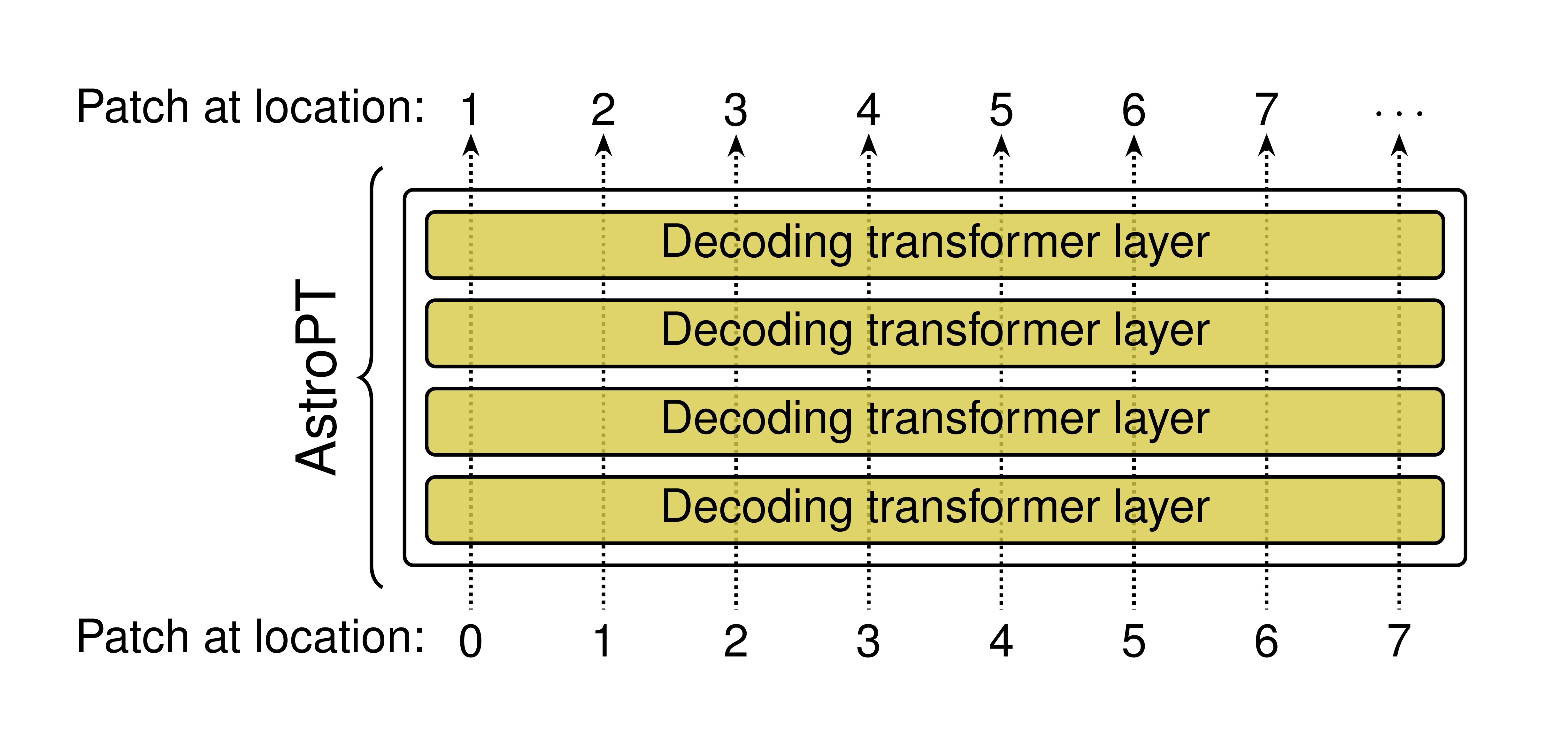
Of course we can apply this next-token-prediction task across many modalities due to its flexibility.
Check out our work on Euclid data for an example, where we chain galaxy image tokens and spectral energy distribution data and pass them into a single, unified AstroPT model.
Key features
Multi-modal data support: Works with galaxy images, spectral energy distributions, and more
Flexible architecture: Based on the transformer architecture for powerful sequence modeling
Pre-trained models: Available for DESI Legacy Survey and Euclid data
Easy integration: Simple API for loading and using pre-trained models
Open Source: AGPL-v3 licensed for both academic and commercial use